

The problem and why it matters
Custom nitinol wire delivers exceptional flexibility and shape memory for implants and instruments, yet tiny surface particles and volatile residues can undermine performance and regulatory acceptance. At industry gatherings such as Medtec China, device designers and suppliers routinely cite particulate contamination and outgassing as top failure modes that show up late in validation. These issues threaten biocompatibility, interfere with sterilization, and complicate assembly into catheters or implantable devices.

Where contamination comes from
Particulate contamination on nitinol arises from machining, grinding, handling, and ambient dust. Outgassing comes from lubricants, polymer coatings, and process residues that volatilize under vacuum or heat during sterilization. Cleanroom class and workflow matter — uncontrolled hand-offs or improper tooling leave either residue or metal fines that adhesive tapes and filters won’t always catch.
A simple protocol framework
Adopt a three-step Cleanroom Protocol: Contain, Control, Confirm. Contain means limit exposure immediately after finishing: dedicated transfer carts, covered trays, and single-use gloves for handling. Control means implement process controls — solvent degrease, standardized passivation, and defined cleanroom steps. Confirm means test and document particulate counts and volatile organic compound (VOC) levels before shipments to downstream assembly.
Practical controls that work
Use these practical controls as a checklist: – Final ultrasonic cleaning in validated solvents followed by DI water rinse and controlled drying. – Passivation and neutralization tailored for nitinol surface chemistry to improve corrosion resistance without leaving salts. – Single-step packaging inside Class 7 or better clean zones and sealed double-bagging for transit. These measures reduce particulate contamination and lower outgassing risk during sterilization and use.
Testing and acceptance criteria
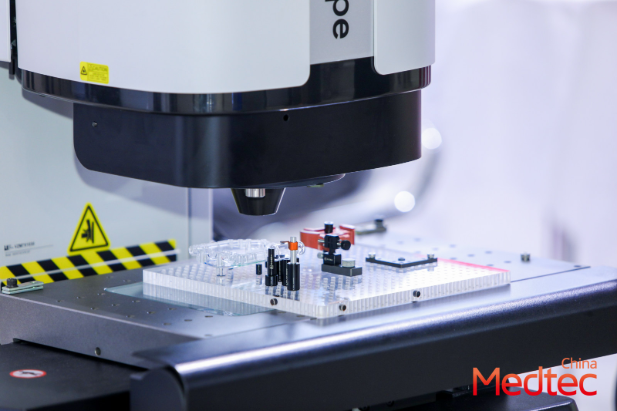
Verification should combine particulate monitoring and simple outgassing checks. Monitor airborne particulate counts in the production area and run surface swipe sampling on finished wires. For outgassing, a headspace VOC scan or thermal desorption test on representative samples reveals volatile residues. Maintain retention samples for a defined period and record test results in traceable logs.
Common mistakes to avoid
Manufacturers often skip one of the three steps — usually Confirm — and assume passivation or rinsing is sufficient. They also mix tooling for stainless and nitinol batches, which introduces cross-contamination. Another misstep: rapid transitions from machining to packaging without an intermediate cleaning hold — that’s where residues bake on and later outgas under sterilization temperatures.
Real-world anchor and credibility
At the Shanghai edition of Medtec China, several OEM engineers presented case studies showing reduced assembly rejects after adopting active containment carts and standardized ultrasonic cycles — measurable gains you can adopt. This aligns with common device-quality expectations and supports regulatory submissions that reference controlled manufacturing environments and documented cleaning protocols.
Implementation checklist
Use this checklist as you roll out or audit processes: – Define cleanroom class for final handling. – Standardize solvent and cleaning cycles; document dwell times. – Validate passivation chemistry for nitinol; record surface finish metrics. – Establish particulate and VOC acceptance limits; perform routine sampling. – Keep retention samples and test logs for the specified retention period relevant to your quality system.
Summary of key trade-offs
Reducing particulate and outgassing adds cycle steps and modest cost, but it cuts rework, shipment holds, and regulatory risk. You’re trading upfront process discipline for downstream predictability and fewer surprises during sterilization or final device validation — a trade that typically pays back quickly.
Three golden rules for selection and evaluation
1) Measure before you change: baseline particulate and VOC data guide corrective steps and justify investments. 2) Standardize tools and separation: keep nitinol workflows and tooling dedicated to avoid cross-contamination. 3) Document everything: validated cleaning parameters and retention samples are the proof reviewers want. These metrics let you evaluate suppliers, processes, and inspection limits objectively.
Good process control simplifies device assembly and keeps regulators satisfied — and when you need practical examples or peer discussions, a medical device show like Medtec often surfaces the best practices that actually work on the line. Medtec. —