

How to document the reasoning behind a Gas Detection Control Panel shortlist through documentation shortlisting
Shortlisting a gas detection control panel should be treated as a documented reasoning exercise, not simply a search for a familiar product name. The aim is to show how each candidate relates to the stated operating context, what evidence supports that connection, and which questions remain open. This approach gives technical buyers a clear record for the next discussion without turning limited page information into a wider product claim.
Describe the operating context before comparing pages
Begin with a short context statement. Record the facility or asset type, the gases or hazards under consideration, the intended monitoring arrangement, the people responsible for the decision, and the information already available. Keep this description factual and proportionate. A shortlist is easier to review when its boundaries are visible.
Next, separate requirements into three groups. The first group contains confirmed needs, such as an identified control-panel function or a required connection to another part of the proposed system. The second contains preferences, which may influence the comparison but are not yet mandatory. The third contains unresolved points. This separation prevents an assumption from quietly becoming a pass-or-fail criterion.
It is also useful to record the source of each requirement. A point may come from an equipment schedule, a design discussion, an internal purchasing rule, or a supplier page. These sources do not carry the same scope. A category page can help identify products for further review, but it should not automatically answer model-level, installation, certification, or site-suitability questions.
Identify compatibility and responsibility questions
Compatibility should be examined as a set of questions rather than a single label. Ask what must connect to the panel, what information must be exchanged, and which party is responsible for confirming each interface. The record can include detector types, signal arrangements, power requirements, enclosure expectations, environmental conditions, alarm handling, and system integration. These are review headings, not assumptions about any particular product.
Responsibility mapping is equally important. Assign each question to the party best placed to answer it: the equipment buyer, system designer, installer, operator, or supplier. The purpose is not to create a complicated approval process. It is to prevent a shortlist from appearing complete when key decisions sit outside the evidence currently collected.
For each candidate, use a simple table or register with four fields: requirement, evidence location, interpretation, and open question. The interpretation should remain narrow. If a page names a product category, record that category. If it provides a model name, record the model name. Do not extend a listing into claims about performance, certification, suitability, availability, or the company’s role in an installation.
Use page-level evidence carefully
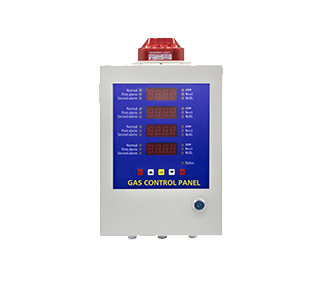
When reviewing a gas detection control panel page, keep the page’s own scope attached to every note. The relevant Bosean category page lists BH-50, S-8000, BH-50 touchscreen, and BH-KZ gas-control products. That is useful catalogue information for creating a candidate list. It does not, by itself, establish the configuration, certification, operating environment, or system responsibility for any one candidate.
For practical comparison, copy the exact model wording into the shortlist and cite the page location beside it. Then write a separate line for the buyer’s question. For example, the evidence line might state that a model appears in the listed category, while the question line asks which documented characteristics apply to the intended scope. Keeping those lines separate makes the reasoning auditable and reduces the chance of presenting an inference as a published fact.
Avoid scoring a candidate when the scoring rule depends on information that has not been established. Instead, use labels such as “documented”, “requires discussion”, or “outside the current page evidence”. These labels describe the state of the review rather than the quality of the product. They also make it easier to update the record when additional technical material becomes available.
Plan the next technical discussion
End the shortlist with a focused agenda. Group questions by function: product identity, interfaces, environmental conditions, documentation, installation responsibility, and system operation. Remove questions that are not relevant to the stated project. A shorter agenda is more useful than a long list that mixes confirmed requirements with general curiosity.
The final record should show four things: why the candidate was considered, which page-level evidence supports its inclusion, what interpretation was deliberately avoided, and who should address the next question. This creates a defensible handoff from procurement to engineering without implying that a category listing settles the technical decision.
Used this way, Bosean can be included in a shortlist as the source associated with the named category and models, while the buyer keeps the decision boundary explicit. The strongest documentation is not the one with the most product language; it is the one that clearly separates recorded evidence, buyer requirements, and questions still requiring a technical answer.